
Deck Furniture Clearance Rules: The Ultimate Guide for Safe Layouts
Discover the exact measurements and spacing rules for arranging deck furniture safely and comfortably. Learn how to avoid common layout mistakes and create a functional outdoor living space.
START PLANNINGOutdoorFurnitureAtlas Philosophy: A beautiful deck isn't just about the furniture you choose—it's about how you arrange it. Proper clearance rules ensure safety, comfort, and flow, transforming your deck into a functional extension of your home. Whether you're working with a compact balcony or a sprawling patio, understanding these guidelines is the key to a successful layout.
Why Deck Furniture Clearance Rules Matter
When you're investing in outdoor furniture, the last thing you want is to create a space that feels cramped or unsafe. Deck furniture clearance rules are the invisible framework that makes your outdoor area work. They dictate how much space you need between pieces, how wide walkways should be, and how to position everything for optimal comfort and safety. Without these guidelines, you risk blocking access, creating tripping hazards, or making your deck feel smaller than it actually is.
Unlike indoor rooms, decks often have unique constraints: railings, stairs, doors, and structural posts. Each of these elements impacts how you can arrange your furniture. By following established clearance standards, you can ensure that your deck is not only stylish but also functional for everyday use and entertaining. This guide will walk you through every critical measurement, from walkway widths to dining spacing, so you can plan your layout with confidence.
The Core Deck Furniture Clearance Rules
Before you start moving furniture around, it's essential to understand the fundamental clearance rules that apply to any deck layout. These rules are based on ergonomics and safety standards, and they form the foundation of a well-designed outdoor space.
Primary Walkway Width
The main path that people use to move through your deck should be at least 36 inches (3 feet) wide. This allows for comfortable passage, even when someone is carrying a tray of food or drinks. If your deck is a primary circulation route between different areas of your home—for example, from a kitchen door to a garden—consider a width of 42 to 48 inches to accommodate multiple people passing simultaneously. For secondary paths that are used less frequently, a minimum of 24 inches is acceptable, but 30 inches is more comfortable. These measurements are critical when planning your patio space planning, as they prevent bottlenecks and ensure easy access to all areas.
Seating Clearance
When arranging seating, you need to consider both the space between seats and the space in front of them. For chairs and sofas, allow 18 to 24 inches between the front edge of the seat and a coffee table or ottoman. This gives people enough room to sit down and stand up comfortably without banging their knees. If you have a patio coffee table, ensure there's at least 14 to 18 inches of space between the table and the seating. For reclining chairs or chaise lounges, you'll need additional space behind them to allow for full recline—typically 12 to 18 inches from the wall or railing.
Dining Area Clearance
Dining areas require more generous clearance to allow people to pull out chairs and move around the table. The general rule is to allow 32 to 36 inches from the edge of the table to the nearest wall, railing, or piece of furniture. This ensures that chairs can be pulled out fully and that people can walk behind seated diners. For a round table, measure from the edge of the table to the nearest obstruction. If you have a outdoor dining set, this spacing is non-negotiable for a comfortable dining experience. For smaller patio bistro sets, you can get away with 24 to 30 inches, but 32 inches is always safer.
Traffic Flow Around Furniture
Beyond specific furniture zones, you need to think about how people will move around your deck. A common mistake is to place furniture too close to railings or walls, creating a claustrophobic feel. Leave at least 12 to 18 inches between the back of a sofa or chair and a railing or wall. This prevents the furniture from feeling crammed and allows for easy cleaning and maintenance. If you have a garden bench against a railing, ensure it doesn't block the view or create a safety hazard.
Clearance Rules for Common Deck Layout Scenarios
Different deck activities require different clearance considerations. Let's break down the most common scenarios and the specific rules that apply to each.
Lounge Areas
For a relaxation zone with a patio sofa or sectional, the key is to create an intimate conversation circle. Allow 18 inches between the sofa and a coffee table, and ensure there's at least 30 inches of walkway behind the sofa if it's not against a wall. If you're using outdoor armchairs, place them at a 90-degree angle to the sofa, with 18 to 24 inches between the chairs and the coffee table. For a loveseat, the same rules apply, but you may need less overall space.
Dining Areas
As mentioned, dining requires 32 to 36 inches of clearance around the table. If you have a counter-height table, the clearance may need to be slightly more (36 to 42 inches) because the chairs are taller and require more space to maneuver. For a picnic table, which often has attached benches, you still need 32 inches from the edge of the bench to any obstruction to allow people to sit down and get up comfortably.
Poolside and Sunbathing Areas
If your deck surrounds a pool, clearance rules become even more critical for safety. Chaise lounges should be placed at least 3 feet apart to allow people to walk between them. Ensure there's a clear path at least 4 feet wide around the pool edge for emergency access and general circulation. For poolside furniture arrangement, always prioritize safety and easy access to the water.
Small Decks and Balconies
For compact spaces, such as a small balcony, you may need to bend the rules slightly. Use furniture that does double duty, like a storage bench that can also serve as seating. Foldable chairs and bistro sets are excellent for tight spaces. In these cases, prioritize a 24-inch walkway and ensure that furniture can be easily moved when not in use. A deck box can also help keep the space clutter-free by storing cushions and small accessories.
Additional Clearance Considerations for a Safe Deck
Beyond the basic measurements, there are several other factors that influence how you should arrange your deck furniture.
Door and Stair Clearance
Never block access to doors or stairs. Allow at least 36 inches of clear space in front of any door that opens outward onto the deck. For stairs, ensure there is a landing area of at least 36 by 36 inches at the top and bottom. This is not just for convenience—it's a critical safety requirement. If you have a storage bench near a door, make sure it doesn't impede the door's swing.
Grill and Cooking Area Clearance
If you have a grill on your deck, it needs its own clearance zone. Keep the grill at least 10 feet away from any combustible materials, including railings and furniture. Ensure there is a 3-foot clear zone around the grill for safe operation. This is a non-negotiable safety rule that should never be compromised.
Wind and Weather Considerations
On an open deck, wind can be a factor. Heavier furniture like teak wood or wrought iron pieces are less likely to blow over, but you still need to consider anchoring. Clearance rules also apply to how you secure your furniture. A patio furniture wind anchoring guide can provide specific advice. Additionally, leave space between furniture and railings to allow for air circulation, which can help prevent mold and mildew. For more on this, see our outdoor furniture mold prevention tips.
Recommended Deck Furniture for Optimal Clearance
⚠️ AFFILIATE DISCLOSURE: This website contains affiliate links. As an affiliate Associate, we earn from qualifying purchases. If you make a purchase through these links, we may receive a small commission at no additional cost to you. Read our full affiliate policy.

Tatuo 11" x 17" Deck Rules Wooden Sign Funny Rules Signs Decorative Outdoor | Regulations Plaque Wall Decor for Bar Campsite Cabin Tent Deck Sign Backyard Outdoors Home
Check price on Amazon
Capoda Deck Decorations Outdoor Deck Rules Sign Hanging Porch Patio Blue | Rustic Wall Plaque with Dock Rules, Ideal for Campsite Backyard Bar Cabin Tent Home Creates Relaxing Summer Art Pool Vibes
Check price on Amazon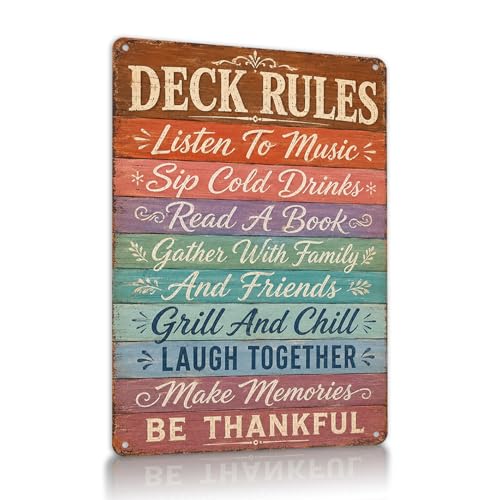
Hannial Rustic Deck Rules Metal Sign, Pool Wall Decor 8"x12" | Outdoor Aluminum Wall Art for Farmhouse Backyard Patio Pool Deck, Gifts for Men Women
Check price on Amazon
Personalized Deck Rules Sign, Aluminum, For Deck, Porch, or Patio (12 x 18, DECK)
Check price on Amazon
Easy Wood Furniture Projects: 32 Step-By-Step Projects for the Home (Black & Decker Home Improvement Library)
Check price on Amazon
Porch Deck Patio Life's Rules Throw Pillow Case, 18 x 18 Inch Set of 4, Front Porch Bench Decorations, Housewarming Gift, Porch Decor, Patio Sofa Decor, Backyard Pillows Cover for Sofa Couch Bed
Check price on Amazon
Inspirational Wood Box Sign Deck Rules Box Sign - Deck Decor, Deck Wooden Box Sign, Wooden Signs For Deck Decor, Patio Table Decor, Patio Signs And Decor Outdoor 5x5 Inch
Check price on AmazonFinal Thoughts on Deck Furniture Clearance
Mastering deck furniture clearance rules is about more than just following numbers—it's about creating a space that feels welcoming, safe, and functional. By adhering to these guidelines, you'll avoid common pitfalls like blocked walkways, cramped dining areas, and safety hazards. Remember, the best deck layout is one that balances your aesthetic vision with practical considerations.
Before you make any furniture purchases, take the time to measure your space and plan your layout. Use painter's tape to mark out where furniture will go, and walk through the space to test the clearance. This simple step can save you from costly mistakes and ensure that your deck becomes the outdoor retreat you've always wanted. For more detailed guidance on specific furniture types and materials, explore our other comprehensive guides, such as our outdoor furniture buying mistakes to avoid and our outdoor furniture size chart for precise dimensions.