
Two Tone Outdoor Furniture Design: The Complete Guide
Discover how to master two-tone patio furniture with expert color pairing, frame-and-cushion contrast, and styling techniques that elevate any outdoor space.
EXPLORE STYLE & DESIGNWhy Two-Tone Works: Two-tone outdoor furniture design is one of the most versatile and impactful styling approaches for patios, decks, and gardens. By combining two complementary or contrasting colors on a single piece—or across a furniture set—you create visual depth, highlight architectural lines, and express personal style without overwhelming the space.
📋 What You'll Learn on This Page
- What Is Two-Tone Furniture Design?
- Why Choose Two-Tone Outdoor Furniture?
- Most Popular Two-Tone Color Pairings
- Frame vs. Cushion: The Classic Two-Tone Formula
- Material Considerations for Two-Tone Pieces
- Styling Tips for Two-Tone Patios
- Common Two-Tone Design Mistakes to Avoid
- What to Look for When Buying
- Frequently Asked Questions
What Is Two-Tone Outdoor Furniture Design?
Two-tone outdoor furniture design is the deliberate use of two distinct colors within a single furniture piece or across a coordinated set. Unlike monochrome designs that rely on one uniform color, two-tone pieces use color contrast to create visual interest, define shapes, and add personality to outdoor living areas.
The concept appears in several forms. The most common is a contrasting frame and cushion combination—for example, a dark charcoal aluminum frame paired with light cream cushions. Another popular approach is color-blocking within the furniture structure itself, such as a chair with a white seat and natural wood legs. Some manufacturers also offer reversible or dual-finish surfaces that let you switch the look seasonally.
Two-tone design is closely related to broader color strategy principles. If you're still deciding on an overall palette, our guide to outdoor furniture color harmony provides a strong foundation before you commit to a specific pairing.
Why Choose Two-Tone Outdoor Furniture?
Two-tone furniture offers practical and aesthetic benefits that make it a smart choice for nearly any outdoor space:
- Visual depth: A single-color furniture set can blend into the background. Two-tone pieces create contrast that makes your furniture stand out and gives the space a designed, intentional feel.
- Flexibility: Because two-tone pieces already contain multiple colors, they pair easily with a wider range of accessories, rugs, and throw pillows.
- Hides wear: Dark frames with light cushions, or vice versa, can mask minor scuffs, dirt, and fading better than uniform light-colored furniture.
- Style versatility: The same two-tone piece can read as modern, coastal, rustic, or bohemian depending on the colors chosen. Explore our guides to modern outdoor furniture styling and coastal outdoor furniture styling to see how color choices shift the mood.
- Perceived value: Two-tone designs often appear more custom and higher-end than single-color mass-market pieces, even at similar price points.
Most Popular Two-Tone Color Pairings
Certain color combinations have proven themselves in outdoor settings because they balance aesthetics with practical durability. Here are the pairings that consistently deliver strong results:
Charcoal & Cream
A timeless, high-contrast pairing that works in modern and transitional spaces. The dark frame grounds the piece while cream cushions keep it feeling light and inviting.
Natural Teak & Black
Warm wood tones against black metal create an earthy, architectural look. Ideal for contemporary patios and outdoor living rooms.
White & Cognac
Crisp white frames with warm cognac or caramel cushions deliver a resort-like feel. Excellent for poolside and coastal settings.
Sage & Sand
A soft, nature-inspired combination that blends beautifully into garden settings. Low contrast but high sophistication.
Black & Gold
A bold, luxurious pairing for statement pieces. Works best on accent chairs and outdoor coffee tables rather than full sets.
Slate Blue & Oatmeal
Cool and calming, this pairing suits Mediterranean and coastal-inspired patios alike.
When selecting a pairing, consider the dominant colors of your home's exterior, your patio flooring, and surrounding landscaping. The goal is contrast that feels intentional rather than accidental. For more guidance on building a cohesive palette, see our article on the neutral outdoor furniture palette or its bolder counterpart, the bold outdoor furniture palette.
Frame vs. Cushion: The Classic Two-Tone Formula
The most accessible and widely available form of two-tone design is the frame-and-cushion contrast. This approach separates the structural element (frame) from the comfort element (cushion), allowing each to carry a different color.
How to Get the Balance Right
The key is to decide which element should dominate. A dark frame with light cushions creates a grounded, furniture-forward look. A light frame with dark cushions reverses the emphasis, making the cushions the focal point. Neither is better—the choice depends on the surrounding environment.
For example, if your patio has dark stone flooring, a light frame with dark cushions can create a bridge between the floor and the furniture. If your patio is light-colored, a dark frame with light cushions adds welcome definition.
This formula works across every furniture category, from outdoor sectionals and outdoor sofas to outdoor dining chairs and outdoor lounge chairs. It's also easy to update: when cushions wear out, you can change the entire look by selecting a new cushion color while keeping the frame. Our guide to outdoor furniture replacement cushions covers how to source compatible replacements.
💡 Pro Tip: If you're unsure which direction to go, start with a neutral frame (black, white, or natural wood) and use the cushion as your color accent. This gives you maximum flexibility to change the accent color later without replacing the furniture.
Material Considerations for Two-Tone Pieces
Not all materials accept color equally well, and some pairings are more durable than others in outdoor conditions. Here's what to keep in mind:
Metal Frames
Powder-coated aluminum and steel are ideal for two-tone designs because the coating can be precisely color-matched and holds up to UV exposure. Black, white, and bronze are the most durable and fade-resistant frame colors. If you're comparing frame materials, our article on wicker vs. metal outdoor furniture breaks down the trade-offs.
Wood Frames
Natural wood tones—especially teak, acacia, and eucalyptus—pair beautifully with both light and dark cushions. The wood's natural grain provides a third visual element that adds richness. If you're considering a wood-frame two-tone piece, our teak outdoor furniture guide explains how different woods age and how that affects color pairing over time.
Resin and HDPE
Modern resin and HDPE furniture is available in a growing range of two-tone options, often with color molded through the entire piece rather than applied as a surface coating. This makes the color far more resistant to chipping and scratching. See our HDPE outdoor furniture guide for more on this category.
Cushion Fabrics
Solution-dyed acrylic and polyester fabrics hold color best outdoors. When selecting a two-tone cushion, confirm that both colors use the same fabric technology—otherwise one color may fade faster than the other, ruining the intended effect. Our outdoor furniture padding guide covers fabric selection in detail.
Regardless of material, proper care extends the life of any two-tone piece. Our outdoor furniture surface care guide provides maintenance routines for every material type.
Styling Tips for Two-Tone Patios
Once you've selected your two-tone furniture, the way you style the rest of the space determines whether the look feels cohesive or chaotic. Here's how to pull it together:
- Repeat the colors, don't introduce new ones. Pull the two furniture colors into your accessories—a rug that echoes the frame color, pillows that pick up the cushion tone. This creates visual rhythm without adding complexity. Our outdoor throw pillow layering guide shows how to do this effectively.
- Use a third neutral as a bridge. If your two colors are high-contrast, introduce a neutral (like a sand-colored rug or natural wood side table) to soften the transition.
- Anchor the arrangement. Two-tone furniture benefits from a strong focal point. An outdoor furniture set with fire pit or a well-placed outdoor umbrella can serve this purpose. See our outdoor focal point design guide for more ideas.
- Mind the symmetry. Two-tone pieces often have strong geometric lines. Arranging them symmetrically (or with deliberate asymmetry) amplifies their impact. Our patio table symmetry guide explains the principles.
- Consider the vignette as a whole. Step back and view the entire seating area as a single composition. Our outdoor furniture vignette ideas article walks through this process step by step.
For smaller spaces, two-tone furniture can actually make a patio feel larger by drawing the eye to specific zones. Our small patio layout ideas guide explains how color placement affects perceived space. For larger, open-concept areas, see open concept outdoor layouts.
Common Two-Tone Design Mistakes to Avoid
Even a well-intentioned two-tone scheme can go wrong. Watch out for these pitfalls:
- Too many competing patterns. If your furniture is two-tone, keep rugs and pillows solid or subtly textured. Mixing bold stripes with two-tone furniture creates visual noise.
- Ignoring undertones. A cool gray frame paired with a warm cream cushion can look mismatched. Check that both colors share a warm or cool undertone. Our outdoor furniture color psychology article explains how undertones affect perception.
- Forgetting the fifth wall. The ground (patio surface) and the sky (umbrellas, pergolas) are part of the color story. A two-tone furniture set on a busy patterned patio can feel chaotic.
- Choosing fashion over function. Very light cushions show dirt; very dark cushions absorb heat. Balance aesthetics with the realities of your climate and usage.
- Not checking fade resistance. As mentioned, mismatched fade rates between the two colors will ruin the design faster than any styling mistake. Always verify UV ratings.
What to Look for When Buying Two-Tone Outdoor Furniture
When you're ready to purchase, keep these criteria in mind:
- Color fastness ratings: Look for fabrics rated for 1,000+ hours of UV exposure. Frames should be powder-coated, not painted.
- Cushion thickness and density: A two-tone design draws attention to the cushions, so quality matters more than ever. Quick-dry foam and removable, washable covers are worth the investment.
- Frame warranty: A strong warranty (5+ years on frames, 2+ years on cushions) signals manufacturer confidence. See our warranty information for outdoor furniture guide for what's standard.
- Assembly requirements: Two-tone pieces often have more components. Check whether assembly is required and how difficult it is. Our outdoor furniture setup guide can help you prepare.
- Availability of replacement parts: If you're investing in a specific two-tone look, confirm that replacement cushions and covers will be available in the same colors down the road.
Price varies widely by material and brand. Entry-level two-tone aluminum sets typically run $800–$2,500, while premium teak or high-end resin sets can exceed $3,000. Cushion replacement sets generally cost $200–$600 depending on size and fabric.
If you're still comparing styles and materials before committing, our outdoor furniture style & design hub is the best starting point. You can also browse curated collections in our editor's choice outdoor furniture and highest rated outdoor furniture roundups.
Frequently Asked Questions About Two-Tone Outdoor Furniture
What is the best two-tone color combination for outdoor furniture?
There's no single "best" combination, but charcoal and cream, natural teak and black, and white and cognac are the most versatile and widely available. Choose based on your home's exterior colors and your patio's existing hardscape.
Does two-tone outdoor furniture go out of style?
Classic pairings like black-and-white or wood-and-neutral have remained popular for decades. Trend-driven pairings (like specific pastel combinations) may date faster. Sticking to one neutral plus one accent color is the safest long-term strategy.
Can I create a two-tone look with furniture I already own?
Yes. The easiest approach is to add contrasting cushions or pillows to existing furniture. You can also paint or powder-coat metal frames, or add a contrasting outdoor rug to visually split the color story.
Is two-tone furniture harder to maintain?
Not inherently. However, if the two colors have different fade rates, the piece may look uneven over time. Choose UV-resistant materials for both colors and follow a consistent cleaning routine.
Where should I place two-tone furniture for maximum impact?
Two-tone pieces work best where they can be seen against a contrasting background—for example, a dark frame against a light wall, or a light frame against a dark fence. Avoid placing two-tone furniture against a similarly colored surface, which diminishes the effect.
How does two-tone design differ from color-blocking?
Two-tone refers specifically to two colors. Color-blocking can involve three or more distinct blocks of color. Two-tone is generally more restrained and easier to execute successfully in outdoor spaces.
Final Thoughts: Making Two-Tone Work for You
Two-tone outdoor furniture design is one of the most reliable ways to give your patio a designer look without a designer budget. The formula is simple: pick two colors with intentional contrast, repeat those colors in your accessories, and let the furniture's structure do the visual work.
Whether you're drawn to the crisp contrast of black and white, the warmth of teak and charcoal, or the softness of sage and sand, the key is consistency. Once you've chosen your pairing, resist the urge to add a third color. Instead, vary texture and scale to keep the space interesting.
Ready to explore more style directions? Visit our Style & Design hub for guides on every major outdoor aesthetic, or jump directly to our outdoor furniture vignette ideas for room-by-room inspiration.
Recommended Two-Tone Outdoor Furniture
⚠️ AFFILIATE DISCLOSURE: This website contains affiliate links. As an affiliate Associate, we earn from qualifying purchases. If you make a purchase through these links, we may receive a small commission at no additional cost to you. Read our full affiliate policy.

2Pcs Patio Furniture Set, Wicker Outdoor Sectional Sofa with Cushion,Sand | Modular Outdoor Furniture Set for balcony, porch, deck, yard. Easy Assembly. Patio Conversation Set.Patio Set for 2
Check price on Amazon
LUXOAK 9-Piece Patio Furniture Set with Rocking Chairs & Storage Table | Outdoor Wicker Sectional Sofa, Curved Half-Moon Design, Glass Storage Table, 360° Swivel Rocking Chair, All-Weather PE Rattan
Check price on Amazon
Devoko 3 Pieces Patio Furniture Set Outdoor Wicker Chairs and Table, Beige | Upgraded PE Rattan Patio Conversation Set of 2, Sturdy Outdoor Furniture for Porch, Garden, Poolside, Balcony
Check price on Amazon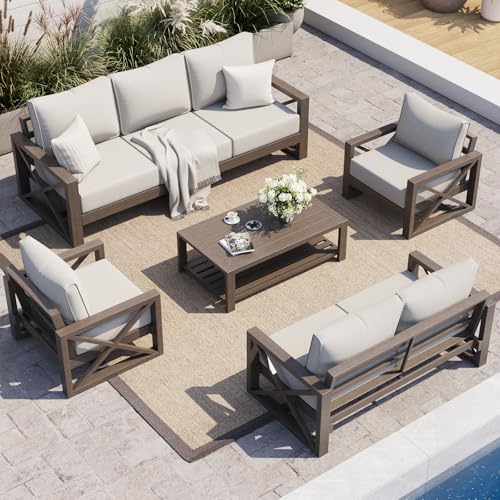
UDPATIO Aluminum Outdoor Patio Furniture Set Faux Wood Grain 5 Pcs Beige | Faux Wood Grain Modern Outdoor Furniture, 6" Cushions Metal Patio Conversation Sofa for Poolside, Deck, Include Covers
Check price on Amazon
Signature Design by Ashley Transville Outdoor Counter Height Dining Table | 72-Inch Patio Dining Table, Built-In Umbrella Hole, Durable Weather Resistant HDPE, Modern Two-Tone Gray and White
Check price on Amazon
VINGLI 6 Pieces Wicker Patio Furniture Set, Outdoor Sectional Furniture Patio Conversation Set Space-Saving Design with Ottomans and Coffee Table for Garden,Poolside, Backyard(Grey)
Check price on Amazon
LAUSAINT HOME 3-Piece Rocking Bistro Set, Outdoor Patio Furniture with Thick Cushions and 2-Tier Coffee Table, Oversize Rattan Conversation Set for Garden, Balcony, Backyard (Beige)
Check price on Amazon