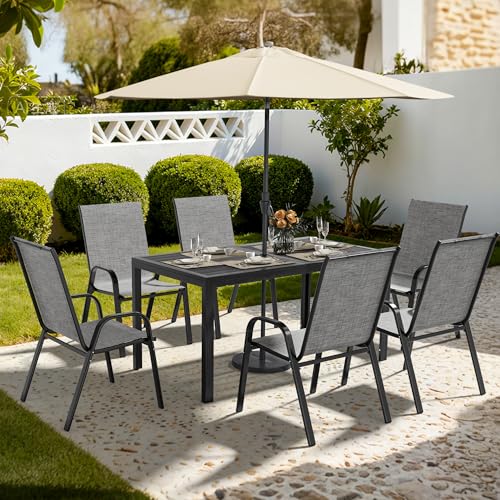
Sizing and Space Planning for Your 6-Seater Set
Before you fall in love with a design, you must ensure it fits. A standard rectangular outdoor table for six typically measures between 60 to 72 inches in length and 36 to 40 inches in width. However, you also need to account for the space the chairs occupy when pulled out. A good rule of thumb is to allow at least 36 inches of clearance around all sides of the table to allow for comfortable seating and walking space. For a more detailed breakdown of layouts, our patio space planning guide offers valuable insights. If your space is more compact, a round table might be a better choice, but always measure your area first. For those with a larger area and a need for more seating, you might consider a 6-seater outdoor table as a versatile option.
Choosing the Right Material for Durability
The material of your dining set is the single most important factor in its longevity. Each material has its own set of pros and cons:
- Wood: Teak, acacia, and eucalyptus are popular for their natural beauty and durability. They require more maintenance but can last for decades. A rectangle outdoor dining table in teak is a classic, investment-worthy choice.
- Metal: Aluminum is lightweight and rust-resistant, making it ideal for coastal areas. Cast aluminum and steel are heavier and more sturdy, but may require touch-ups if the finish chips. For a modern look, consider a aluminum outdoor table and chairs set.
- Wicker & Resin: Natural wicker offers a timeless, textured look, while synthetic resin wicker is incredibly weather-resistant and low-maintenance. Both can be found in beautiful natural wicker outdoor furniture designs.
Comfort and Style: Chairs and Cushions
The chairs are just as important as the table. Look for chairs with ergonomic designs, such as those with contoured seats or high backs. Many sets come with cushions, but you may want to upgrade them for better comfort and style. Our guide to outdoor chair cushions with backs can help you find the perfect fit. For a cohesive look, choose a color palette that complements your outdoor space. For example, grey outdoor cushions offer a neutral, modern feel, while blue outdoor bench accents can add a pop of color. If you have a set of six chairs, you'll need to consider a outdoor dining chair cushions set of 6 for a uniform look.
Style Considerations: From Modern to Classic
Your outdoor furniture should reflect your personal style. Are you drawn to clean lines and minimalism? A mid-century modern outdoor dining set might be your perfect match. If you prefer a more traditional look, a classic outdoor furniture set in teak or wrought iron could be ideal. For a bohemian vibe, consider a resin outdoor dining set with a natural wicker finish. For a truly unique and trendy look, explore trendy outdoor furniture options that can make your patio stand out.
Budgeting for Your Outdoor Dining Set
Prices for an outdoor table and 6 chairs vary widely based on material, brand, and craftsmanship. You can find a basic set for around $500. A mid-range set in aluminum or resin wicker typically costs between $800 and $2,500. High-end sets in teak or premium cast aluminum can range from $2,500 to $5,000+. When budgeting, remember to factor in the cost of cushions, a protective cover, and potential shipping fees. For those looking for a great deal, exploring outdoor seating sale events is a smart move.
Frequently Asked Questions (FAQ)
What is the standard size of an outdoor table for 6 chairs?
A standard rectangular outdoor dining table for six people is typically 60 to 72 inches long and 36 to 40 inches wide. Round tables that seat six usually have a diameter of 54 to 60 inches.
How much space do I need for a 6-seater dining set?
You should allow for at least 36 inches of clearance on all sides of the table to accommodate chairs and allow people to move around comfortably. This means your patio should be at least 10 feet by 10 feet for a comfortable layout.
Is a rectangular or round table better for 6 people?
Rectangular tables are great for utilizing wall space and are more traditional. Round tables promote conversation and work well in square or open spaces, as they have no "head" of the table, making everyone feel equal.